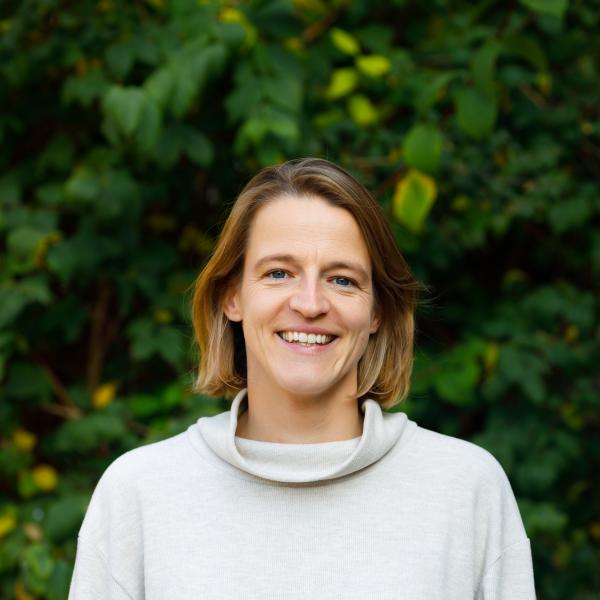
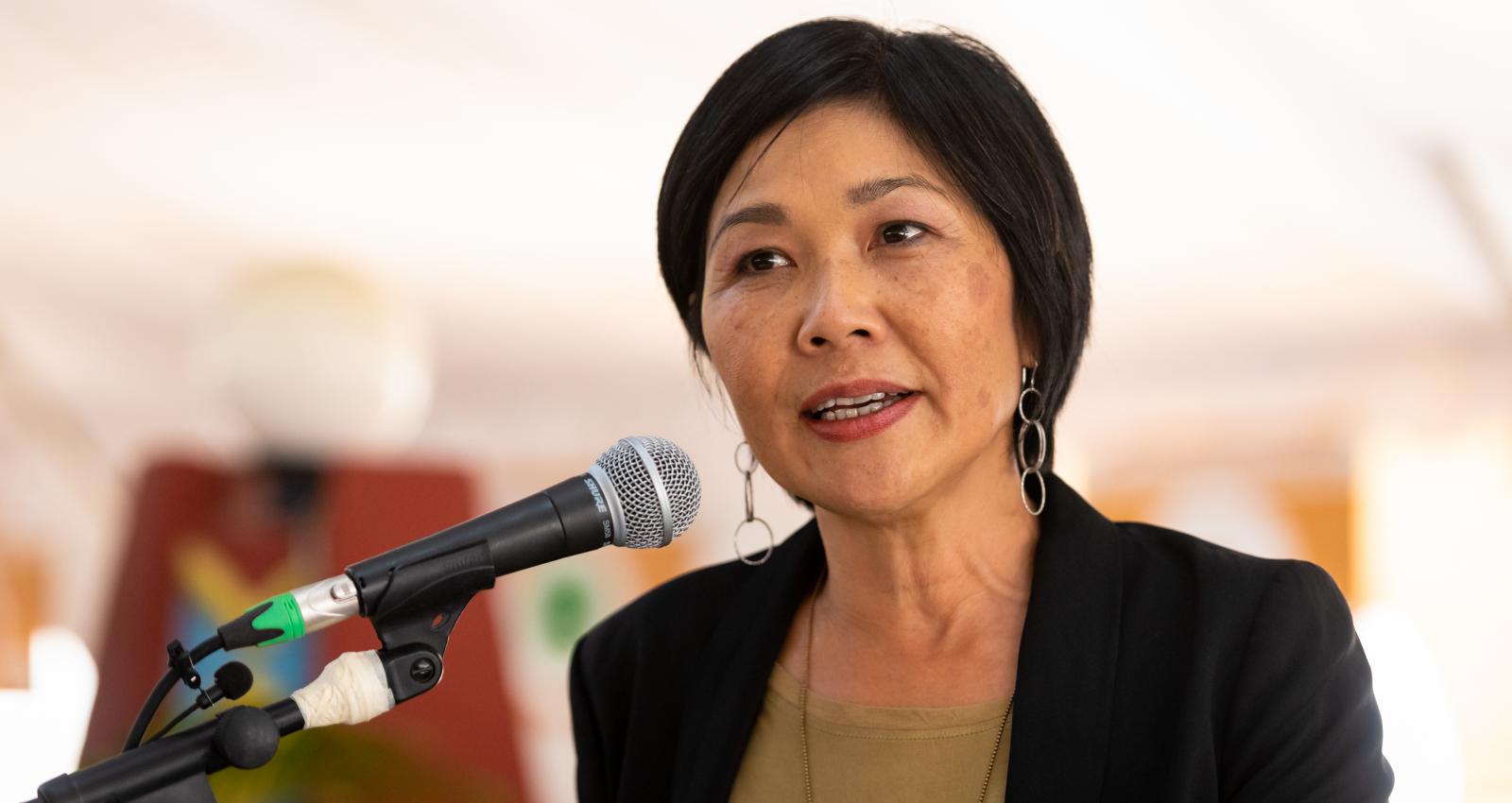
We are delighted to welcome a new member to the Steering Committee: Sophie Pham-Holliday, an expert in education, training, and employment at APEFE. Sophie takes over from Luc Ameye, who has played a pivotal role since the platform’s foundation in 2010. Luc is stepping aside to focus on other responsibilities within APEFE. To get to know Sophie better, we met with her to discuss the platform's challenges and future projects.
Hello Sophie, could you introduce yourself briefly?
My name is Sophie Pham-Holliday. As my international surname suggests, I am of Vietnamese origin, living in Toulouse in the south-west of France, and married to a Scotsman. I am what you might call a "false new arrival" because I have worked with APEFE for 12 years. Before joining the headquarters in Brussels last March, I worked with APEFE as a programme administrator in Senegal and as an expert in training engineering for vocational training (FTP) in Rwanda.
My career in the education sector, particularly in continuing education within international cooperation, started much earlier. I also worked in Southeast Asia, in Laos, Cambodia, and especially in Vietnam for AUF (Agence Universitaire de la Francophonie). The common entry point of capacity building for teachers and trainers enabled me to explore higher education, technical and vocational training (TVT) and basic education.
What does your current role involve?
I am a project officer for education at APEFE, which is the international cooperation agency within the Wallonia-Brussels Federation. Essentially, I am the point of reference for all so-called "education" programmes, particularly continuing teacher training.
Additionally, I represent APEFE as a project coordinator within RTIA (Regional Teachers' Initiative for Africa), a flagship project of the European Commission. The RTIA aims to assist African countries in improving the quality of teacher education and training. It is supported by three member countries: France, Finland, and Belgium. Within this framework, APEFE, VVOB, and Enabel form "Team Belgium." This desire to strengthen the well-being and professional development of teachers has been resolutely taken up by Belgium, which has added parallel funding for the Teach2Empower programme implemented by the 3 Belgian agencies under the lead of Enabel. So I'm coordinating the APEFE part, which is deploying a green education project in Senegal and gender project focusing on positive masculinities in the DRC (Democratic Republic of Congo).
It’s been nine months since you started working at the headquarters of APEFE. How has the experience been for you?
Field experience is incredibly valuable and beneficial in my daily work. There is often a disconnect between the partner countries and the headquarters, with differing levels of sensitivity to field issues. I am well-placed to understand these sensitivities, especially in relation to the pragmatic and political challenges that are not always apparent in Brussels. Having worked for many years in partner countries greatly helps me in fulfilling my role today.
How do you see your role within the platform?
APEFE is responsible for being involved in the platform, as it has been one of Educaid.be’s two co-founders since 2010.The transition with my predecessor, Luc Ameye, happened gradually. I took the time to familiarise myself with the platform and understand how it operates. I participated in the mid-term evaluation alongside Luc, which allowed me to better grasp the challenges and expected outcomes.
Last October, I played an active role in organising the Educaid.be International Conference on Education and Technology. Through this, I discovered how such events foster a sense of belonging among participants and strengthen ties and cohesion within the group.
What do you see as the key challenges for the platform?
The main challenge is to continue functioning as a useful and effective programme for all entities and across all SDGs (Sustainable Development Goals), not only SDG 4. Education and training are interconnected and have links to gender equality, digitalisation, and sustainability. Education is constantly evolving, and addressing these intersectional issues is essential.
Another challenge is to maintain the platform’s diversity and further involve its various members. The diversity of the platform is its strength. Smaller organisations have a place within the platform, and we must support each other to speak with one voice if we wish to influence political decisions.
What is your motto?
My professional life revolves around education. What motivates me is seeing the tangible results of my work. Education is a powerful tool for social inclusion. However, if we want to achieve a critical mass, we must focus even more on the final beneficiaries of our actions. I like to believe there is genuine added value in the work we do. My aim is to help narrow the gap between intentions and reality.
Thank you for this discussion, Sophie. We look forward to working with you. We would also like to express our heartfelt gratitude to Luc, for his dedication to the platform over the years. We hope to see you again at one of our future events.