
This session explores how early childhood education has evolved and responded to major social and political transitions across the globe.

In the first part of the session, Dr. Jan Peeters and Sarah Klaus, EdD will reflect on the origins and legacy of the Step by Step programme, launched thirty years ago by the Open Society Foundations in the wake of the fall of the Berlin Wall and the collapse of the Soviet Union. Born out of this moment of profound change, Step by Step introduced democratic and inclusive approaches to early education in more than 30 countries. Jan and Sarah will share how the programme inspired radical reforms by building trust among educators and families, and what lessons it offers for strengthening early childhood systems in support of equity and democracy today.

To conclude the session, Professor Hasina Banu Ebrahim will offer insights from South Africa, where early childhood development (ECD) has undergone significant transformation. She will reflect on two decades of policy development, current challenges - including the recent integration of ECD into the Department of Basic Education - and the role of VVOB’s Funda Udlale Nathi programme in addressing systemic barriers and professionalizing the ECD workforce.

Together, these presentations offer a timely exploration of early childhood education in transition, across continents and political contexts.
Educating Children for Democracy: The Role of Early Childhood Education in Social and Political Transitions

Thirty years ago, following the fall of the Berlin Wall and the collapse of the Soviet Union, the Open Society Foundations launched what would become one of the largest early childhood programmes financed by a Foundation: the Step by Step Programme. This education reform programme – which has been introduced in more than 30 countries - mobilised the potential of early years to shape better futures for children and societies.

Step by Step introduced democratic approaches in education systems that had been supporting communist ideologies. It celebrated diversity and children’s agency; replaced teacher centered approaches with child-centered methods; engaged parents and families in preschools; and liberalised the curriculum, freeing teachers from government-mandated lesson plans. It supported the establishment of the International Step by Step Association, a regional (Europe/Eurasia) network of civil society organisations devoted to equity and inclusion in early childhood, which continues to carry forth this mission.

Jan and Sarah will share the excitement of the political changes in Europe and Eurasia in the 1990’s that inspired the Open Society, governments, the education community and parents to introduce radical changes in early education systems in so many countries. They will describe how Step by Step created a climate of trust that motivated teachers and parents to change their approach to young children, and what they have learned about reforming early education systems. Their conclusion will highlight how early childhood programs can preserve and advance democracy in these challenging times.

Their presentation is based on the open access book, Early Childhood Education in Social and Political Transitions, which they co-authored together with Tatjana Vonta (Slovenia). The book draws insights from interviews and focus groups conducted over a two year period with international experts and key stakeholders in the Step by Step Program.

Download the publication

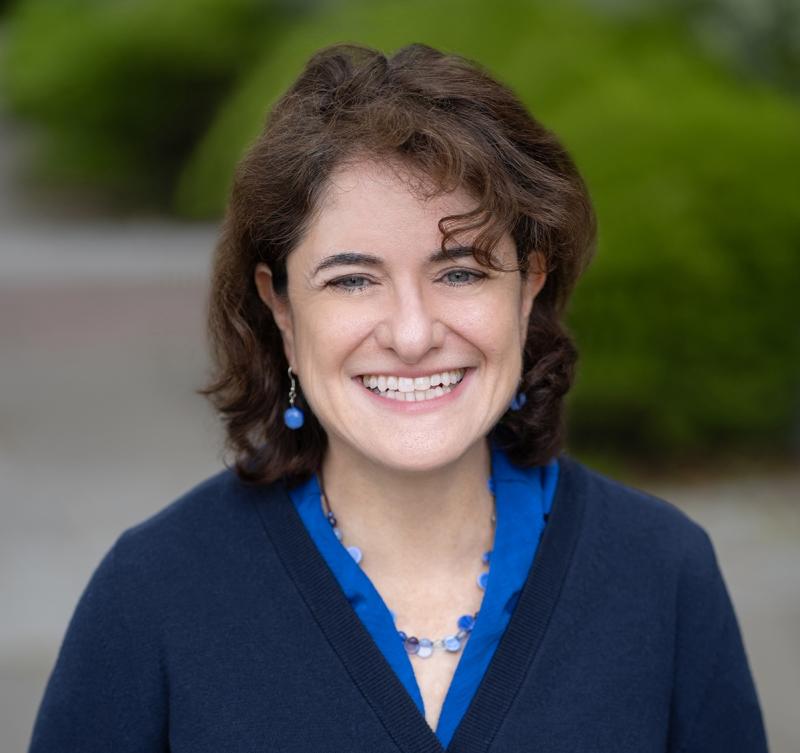
Sarah Klaus, EdD

Georgetown University and OneSky

Sarah’s career spans academia, philanthropy and civil society with a focus on social inclusion and equity in international early childhood. She advises global parenting, childcare and early education initiatives and is currently serving as OneSky’s Senior Global Program Advisor. Previously, she directed the Open Society Foundations Early Childhood Program, where she promoted creation and capacity building of essential national, regional and global networks and served for 7 years as the founding Executive Director of the International Step by Step Association. Sarah is adjunct Assistant Professor, affiliated with Georgetown University. She is based in London and holds an EdD in Early Childhood Education from University College London and an MA in Developmental Psychology from Columbia University.

Portrait of a woman with Brown hair
Portrait of a man with glasses

Dr. Jan Peeters

UGent

Jan Peeters was the director of ’Innovations in the Early Years’ a research and innovation centre at the Ghent University (1986-2018) and did his PhD on Professionalism in ECEC. He was the promotor of several research projects for the European Commission (2009-2018) and worked as a consultant for UNICEF in 7 Eastern European countries (2013-2022). He also collaborated with VVOB in projects in South Africa and Vietnam (2019-2021). He was the president of a working group of the VLOR about the ‘Future of Kindergarten in Flanders’ (2020-2023). He published together with Sarah Klaus and Tatjana Vonta the book ‘ECE in Social and Political Transitions’ about 30 years of Step by Step.

Transforming Early Childhood Development in South Africa: Policy, practice, and possibility

Professor Hasina Banu Ebrahim from South Africa will conclude the session by offering her in-depth insights into the development of Early Childhood Development (ECD) in South Africa. Her contribution will provide a rich and contextual perspective that ties together the broader theme of early childhood education in transition.

In her presentation, Professor Ebrahim will:

  • Reflect on the evolution of ECD in South Africa over the past 20 years, highlighting key policy shifts, implementation challenges, and the growing recognition of early childhood as a critical foundation for lifelong learning and development.

  • Discuss current challenges and opportunities, with particular focus on the recent function shift of ECD to the Department of Basic Education (DBE). She will explore what this transition means for government, practitioners, and families, and how it reshapes the ECD landscape.

  • Highlight the role of VVOB’s Funda Udlale Nathi (FUN) programme, with a focus on the work of the SAIDE Consortium. She will demonstrate how this initiative is addressing systemic challenges, contributing to the professionalization of the sector, and supporting educators working with young children.

Prof. Hasina Banu Ebrahim

University of South Africa

Hasina Banu Ebrahim is a full professor and the UNESCO co-chair in Early Childhood Education, Care and Development at the University of South Africa. She is an NRF C1-rated researcher with a substantive focus on Early Childhood Policy, Practice, and Workforce Development. She has won institutional and national awards for her research. She has 16 years of experience in Pre-Junior Primary Education and 22 years in Teacher Education in the early years (birth to 9). She has a number of publications and has delivered numerous keynote addresses nationally and internationally. She serves on the SA ECD Human Resource Task Team and is the ECD Knowledge Convener in the African Union’s Continental Education Strategy (16-25). She has led several projects related to the professionalisation of the early childhood workforce. Her current projects include Early Childhood Workforce Sustainability and Systems for Equity and Social Justice.

Portrait of a woman with a head covering

Register!